New York City is among my favorite cities in the world. Printed Matter is one of my favorite entities that exists in the world. MoMA PS1 has become my favorite art space in that favorite city.
NYC + Printed Matter + MoMA PS1 =
- A Very Hyper-stimulated Me
- A Very Happy Me
- A Very Broke Me
As those in the therapy field say, more than one thing can be true at once.
I engage in no small amount of magical thinking when confronted with such a dopamine hit as the New York Art Book Fair. The first bit of magical thinking is the initial budget that I set for myself. The second bit are the "rules" that I start to make once I've blown past that initial budget: (a) only buy what you can only buy at the fair; which then becomes > (b) stop buying things when you approach the maximum fill load of your carry-on luggage. The third is the made-up penance I say to myself that I'll do for breaking magical thinking #1 and magical thinking #2 parameters. The last ends up feeling more like a barter with the devil, which like all barters with the dark lord, end up having terms and conditions that I hadn't bargained for. But that is for me alone to wrestle with and, I digress.
The haul was relatively modest, considering the venue and its contents, and I left New York thinking that I had done pretty well for myself (and it did all fit in my carry-on):
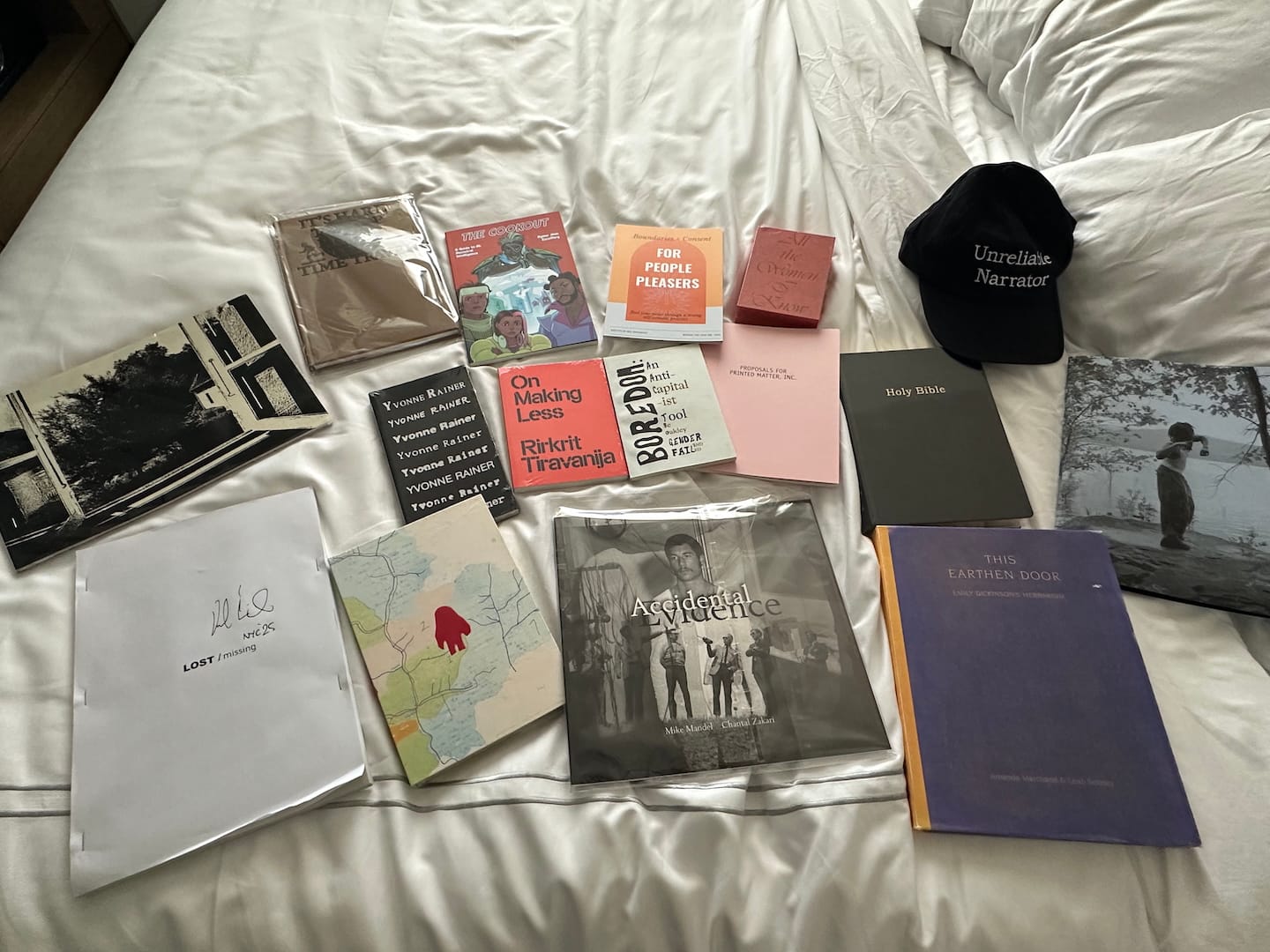
There were books bought to support small presses, there were books bought to support specific artists, there were books bought under the auspices of showing to my next coterie of photobook-making students, there were books bought as gifts for others, and a handful of things that were for my sole—soul?—delight alone. Chief among these was a book that I didn't know existed prior to being at the fair (delight the first), once I realized what it was it aligned immediately with something photographic that I was at that moment consumed with making (delight the second), and lastly, it neatly fit my favorite kind of esoteric niche paradigm: it's a photobook in the truest sense of the word, while also not being recognizably a photobook except to people with a deep and historical love of photographic process (delight the third).
The book I am speaking of is the best use of pandemic time I've come across, aesthetically speaking. It's also an homage to a literary giantess that I have become increasingly infatuated with over the years, and her non-literary abiding obsession of botany. Dear reader, I give you: This Earthen Door, by Amanda Marchand and Leah Sobsey, published by Datz Press.
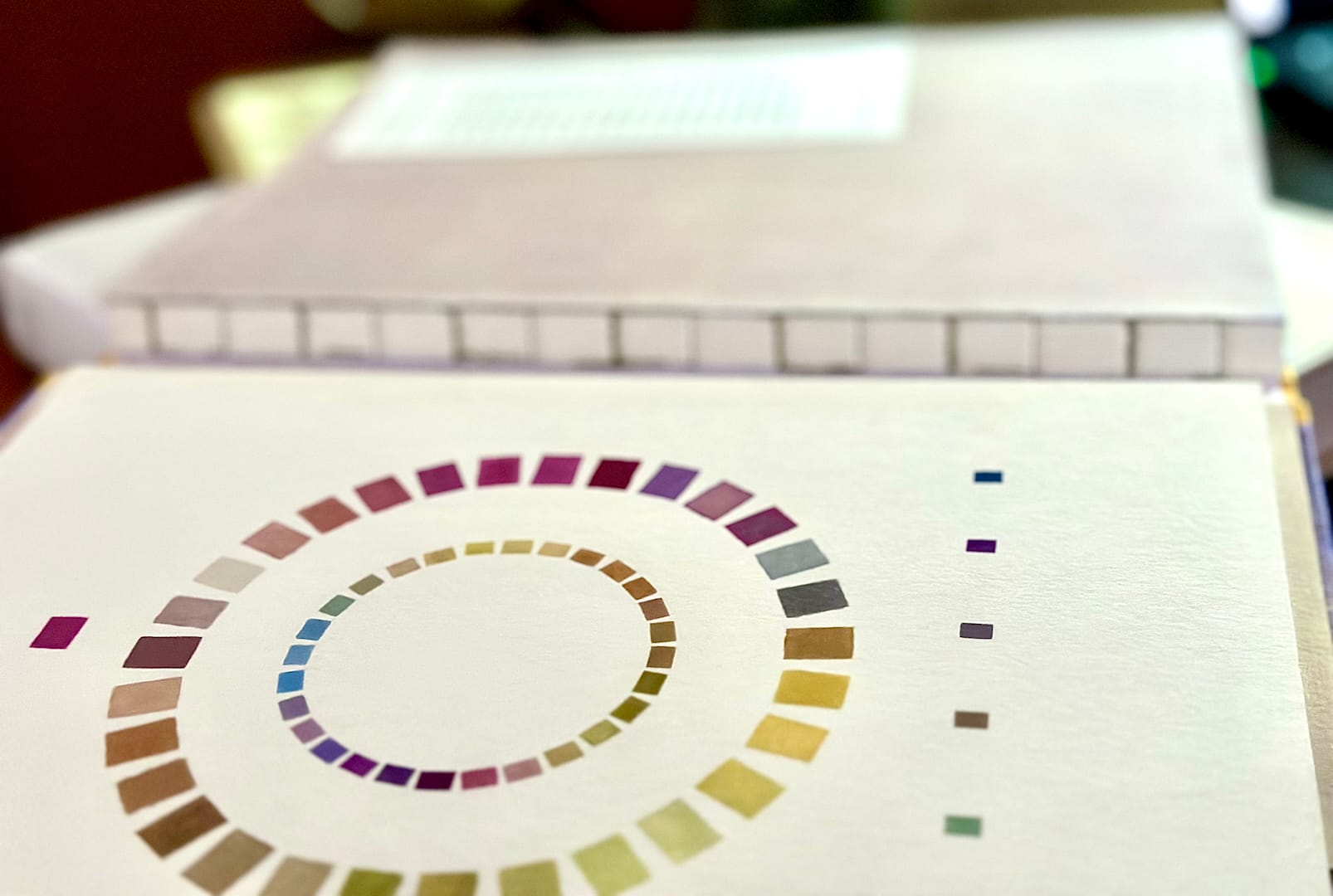
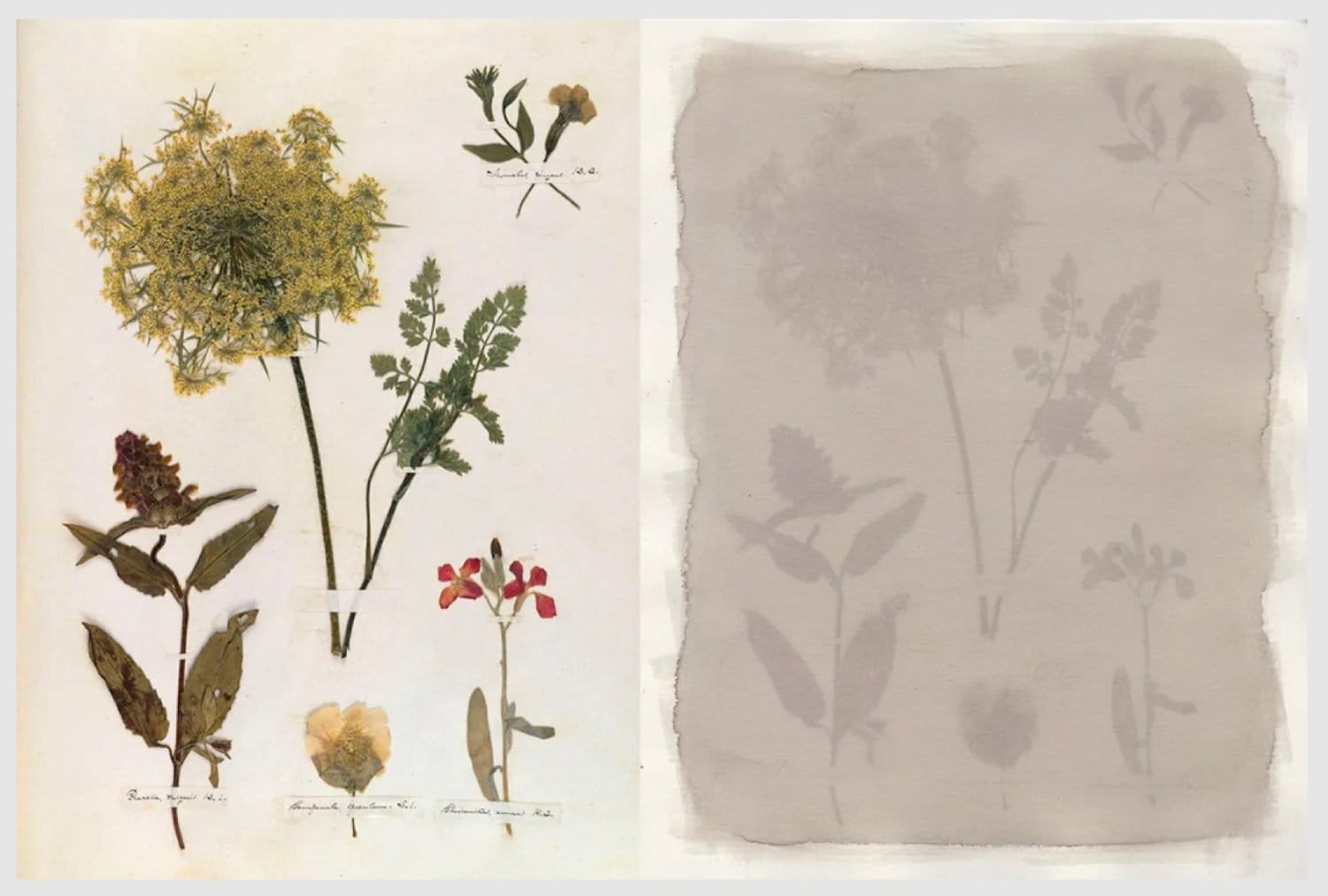
L-R Interior view of This Earthen Door, revealing chromotaxia and swiss binding; Emily Dickinson Herbarium Page on the left, This Earthen Door Herbarium Plate 9 - Poppy on right © Amanda Marchand and Leah Sobsey
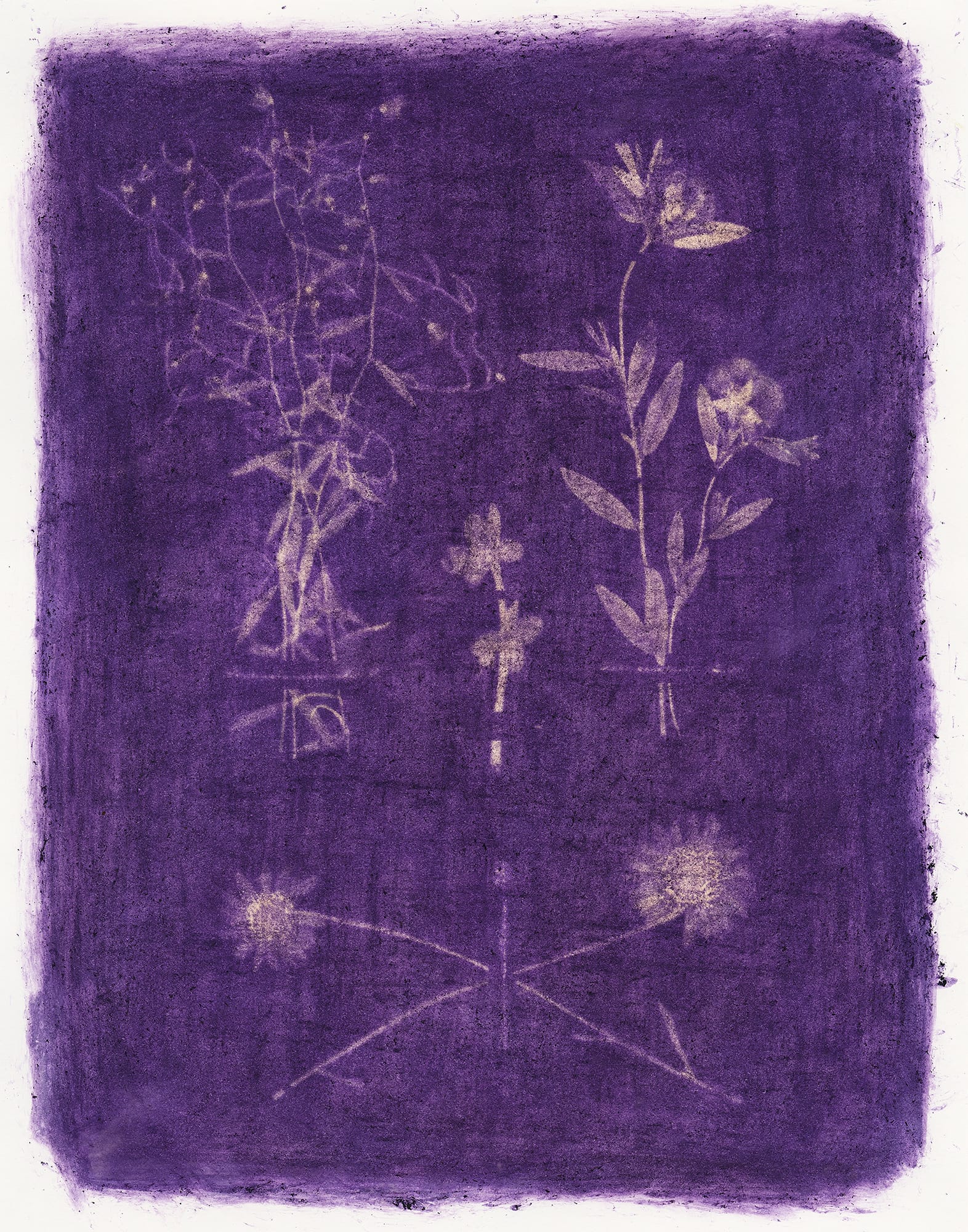
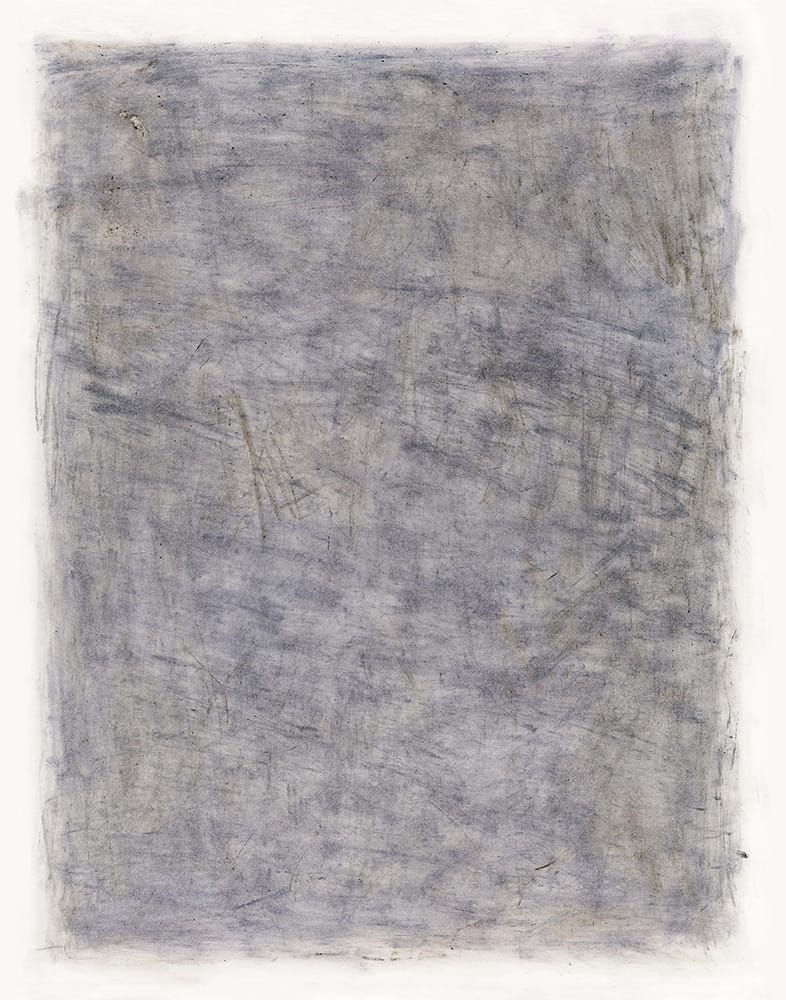
L-R Herbarium Plate 8 – Purple Petunia and The only ghost I ever saw (Ghost Pipe), ©Leah Sobsey and Amanda Marchand
Marchand and Sobsey created something that made me bounce on my feet in excitement as I became more and more aware of their achievement. Emily Dickinson was an avid botanist in her lifetime (she was more well known as a gardener than as a poet); she began creating an herbarium at 14, which eventually came to accumulate over 400 different plant specimens, many annotated by scientific name neatly in her hand. Botany was an acceptable gateway drug to science for women in the Victorian era, and the symbolic as well as scientific language of flora and fauna were a popular vehicle for curious women to fuel their intellect as well as cultivate a craft of making, nurturing, collecting and wonder. Dickinson would often gift a bouquet of "nosegays" to friends, with a poem tucked inside. The herbarium would come to describe both her near and private life—through the varieties that she cultivated and foraged at her home in Amherst, Massachusetts—and her enthrallment with the far-off and exotic, as evidenced in the first page of her herbarium, which showcases Jasminum officinale, or common Jasmine, native to the Caucusus and parts of Asia.
What This Earthen Door does so patiently, painstakingly and brilliantly, is to use a fickle, unpredictable photographic process—the anthotype—to re-create Dickinson's herbarium species for species, page by page. The anthotype is a process of creating a photographic emulsion through the crushing and extraction of plant pigments, often mixing them with an amplifier or extender such as vodka or isopropyl alcohol, and then brushing this emulsion onto paper. When a positive image or a botanical speciman is pressed upon it and left under the light of the sun, an image will eventually appear. Marchand and Sobsey took it upon themselves to create each of the 66 pages of Dickinson's herbarium with anthotypes that they made over the course of two years, in conjunction with digitized positives of the pages of Dickinson's herbarium. The result is an achingly gorgeous object that speaks to both Dickinson's passion for botany and the comet-like ephemerality of a laborious image-making process such as the anthotype. Here is a video of the photographers explaining the anthotype process:
This semester I am teaching a class on cameraless photography, and I spent the last weeks of summer researching the anthotype process and making my own at home to better trial-and-error the process in anticipation of students running into issues and attempting to circumvent road blocks by having worked my way around my own ahead of time. I'm lucky to live in Colorado, where a stretch of summer days are guaranteed to have high UV rating days at more than a mile high in altitude.
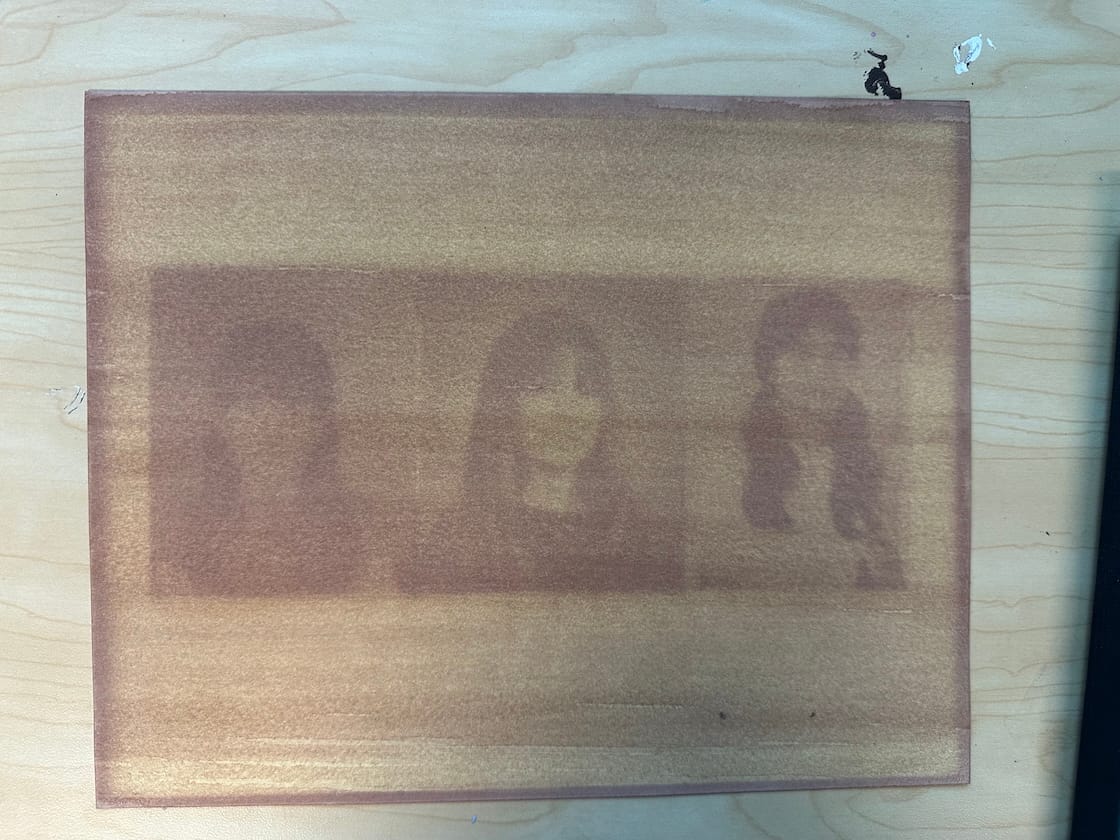
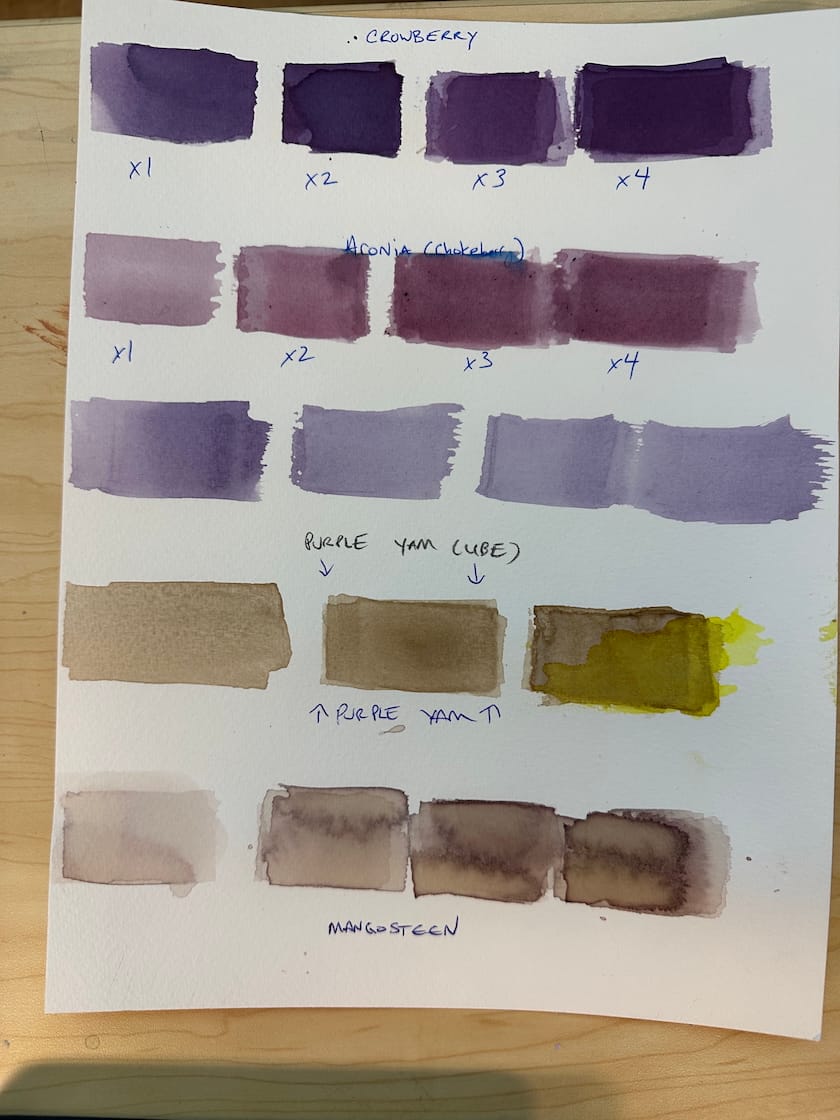
Me, Evie, Mom, anthotype with six layers of purple yam, 2025 and swatch sheet of various anthotype emulsions, 2025.
Still, the process is incredibly fickle: sudden summer storms will wash away six layers of a a carefully applied emulsion; some plants will produce a negative image instead of a positive, which is both surprising and confounding at once. Weeks of work to only have a handful of successful images made me deeply appreciate the tenacity and vision Marchand and Sobsey had in creating This Earthen Door.
In an interview at Lenscratch, Amanda Marchand said of the experience:
Working collectively with 66 of the poet’s plants from the 424 in the herbarium, has meant tending and care, and slowing down, and attention to the moment. Anthotypes are very slow to expose. We have a few that took more than 2 months, and many that took weeks and weeks. There is a language of attention and care embedded in the project. Leah and I are both mothers, and our families were involved, to varying degrees, as contact frames were carted in and out of the rain, or moved to sunnier ground over two years… We worked on this project during the pandemic, when we were at home and our children were at home, so these gardens and their tending extend into the language of nurturing, as artists and mothers. For both of us, these gardens are spaces of light and joy and family.
Having a dilettante's love of both color theory and data, I was delighted by the chromotaxia included in the publication (a book within a book! Fourth delight). Marchand and Sobsey took careful note of exposure times, location, day of time exposed, whether the image used was a positive or negative. They also made a smudge sheet of all of their emulsions, and included whole pages in the text block that consist solely of the brightly colored coating of an extracted specimen before being bleached by the sun.
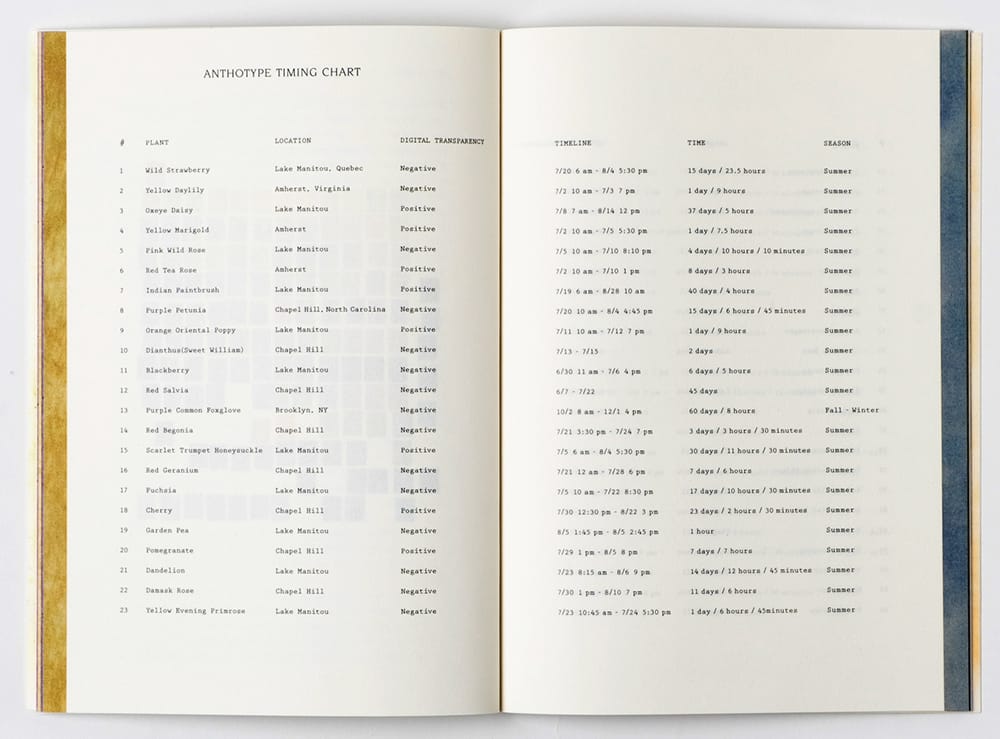
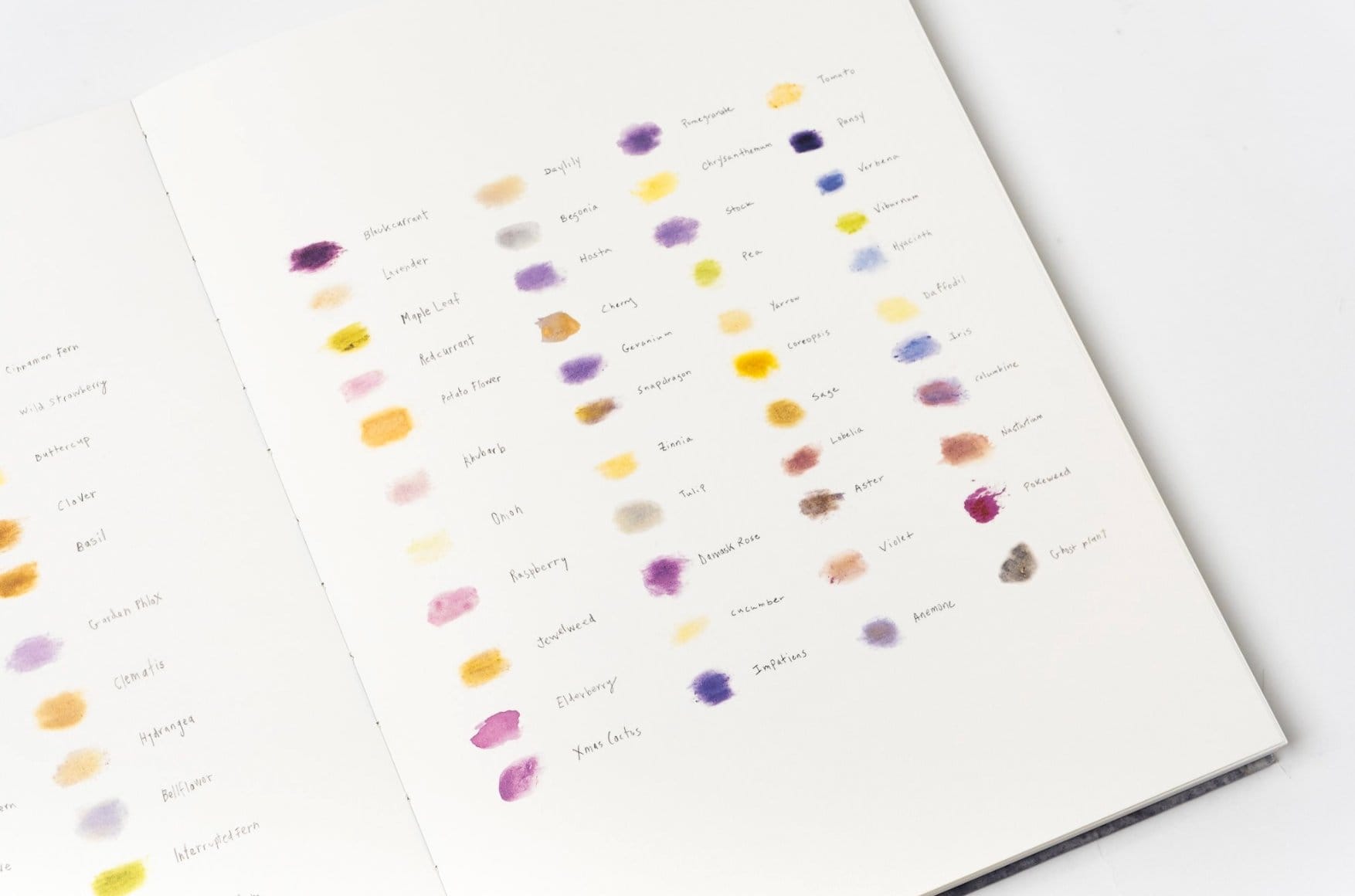
L-R, Anthotype timing chart and This Earthen Door color taxonomy, ©Leah Sobsey and Amanda Marchand.
The collaboration of Leah Sobsey and Amanda Marchand is a testament to friendship, to a beautiful idea brought to fruition through patience, labor, careful observation and to allowing themselves to surrender to the immersive intimacy of Emily Dickinson's fertile, far-ranging and inexhaustible heart and mind. It's a book that I feel fated to have encountered when I did, and very fortunate to live with.